
2026#04: Nifty 500 Breaches Key Support as Market Breadth Plummets into Oversold Zone
Structural Breakdown erases recent gains. Extreme bearishness signals potential for a short-term bounce

The Indian stock market endured a grueling week of selling pressure, characterized by heightened volatility and a decisive breakdown of key psychological supports. Benchmark indices, the Nifty50 and Sensex, retreated significantly as persistent Foreign Institutional Investor (FII) outflows and a record-weak rupee dampened sentiment.
Key Indices Performance:
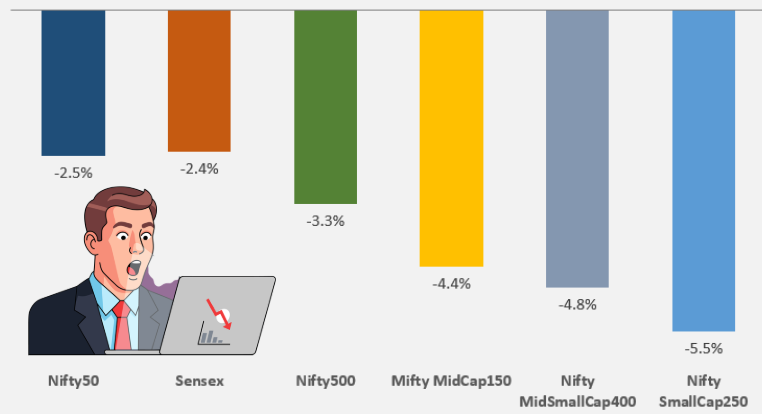
It was a rough week for the broader market, particularly for small and midcaps. Markets briefly rebounded on positive trade sentiment following President Trump's remarks at Davos; however, these gains failed to hold. The Nifty500 ultimately closed the week down 3.3%.
Key Drivers for the Market
Aggressive FII Outflows: Foreign Institutional Investors remained heavy net sellers this week.
Rupee at Record Lows: The Indian Rupee plummeted to a historic low near ₹91.965 per USD, pressured by global ‘risk-off’ sentiment among international investors.
Geopolitical and Trade Tensions: Renewed concerns regarding US-Europe trade relations and potential tariff threats under the Trump administration kept global markets on edge. Trump’s comments on a ‘great’ trade deal between the US and India supported buying interest, but it could not lift the sentiments later in the week.
Q3 Earnings Season: The Q3 of FY26 earnings season is in full swing. The initial set of corporate earnings did little to support markets this week.
Technical Perspective
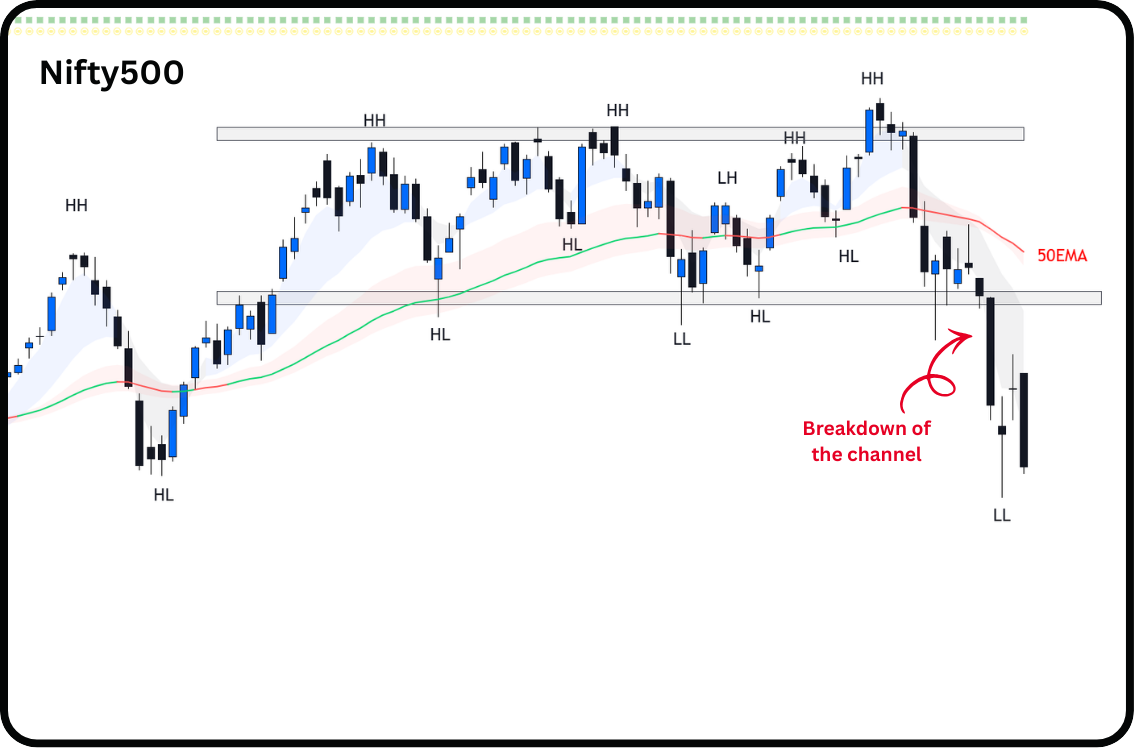
Nifty 500 has undergone a decisive structural breakdown, invalidating previous consolidation zones and entering a confirmed bearish phase.
Channel Breakdown: The index has decisively breached the lower support boundary (approx. 23,400) of the recent consolidation zone. This breakdown was marked by a sharp ‘V-shaped’ decline that erased weeks of gains in a matter of days.
50EMA): The 50EMA is now in declining state and has thus turned red, acting as a stiff overhead resistance level. The price is now trading significantly below 50EMA, signaling a loss of short-to-medium-term momentum.
Establishment of Lower Low (LL): The recent price action has established a clear Lower Low (LL), confirming that the market has transitioned from a sideways range into a downtrend.
The reason we track Nifty500 is because it represents over 90% of the free float market capitalization, making it a comprehensive barometer of market health.
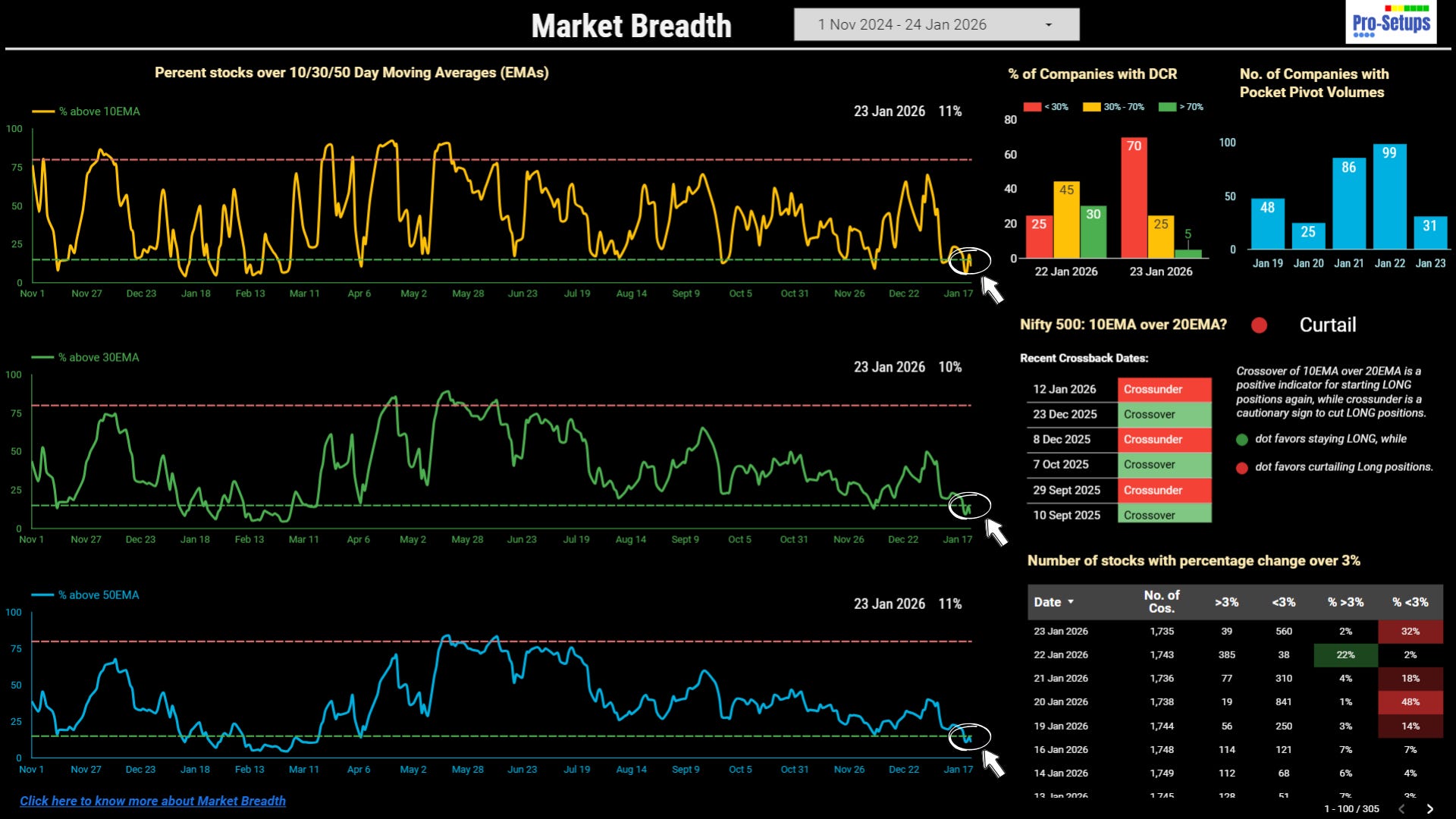
Nifty500’s 10EMA crossed under its 20EMA on 12th January triggering a ‘Curtailing’ signal that suggests reduction or closure of existing long positions.
Market breadth has deteriorated significantly. There has been a significant breakdown in market participation over the last week.
10-Day EMA: 11% of stocks are now trading above their 10EMA, compared to 23% last week.
30-Day EMA: 10% of stocks are above their 30EMA, compared to 22% last week.
50-Day EMA: 11% of stocks are above their 50EMA, compared to 22% last week.
Extreme Bearishness: With only 10-11% of stocks trading above their key moving averages, the market is currently in a state of extreme weakness.
Oversold: Historically, low market breadth readings are often associated with ‘Oversold’ conditions, creating potential for an oversold bounce. However, being ‘Oversold’ is not a ‘Buy’ signal. Market can remain oversold for days or even weeks if a strong downtrend or negative fundamental story is in place. Any immediate bounce may be short-lived. Buying solely because breadth is low without waiting for confirmation can lead to losses if the market continues to decline.
It is important to note that overbought or oversold signals are most relevant for swing traders, as they reflect short-term momentum shifts.
Accessing Market Breadth on Pro-Setups Dashboard is available for all readers. Click on the link below.
Summary
The market remains in a weak structural state. The ‘Buy on Dips’ environment has been completely replaced by a ‘Sell on Rallies’. The breakdown is fueled by aggressive FII selling and escalating India-US trade tensions and global uncertainties. The technical setup suggests that the market will likely remain volatile and under pressure heading into the Union Budget 2026. With breadth readings hovering near 10%, the market is in ‘oversold’ territory, looking for a short bounce.