
2026#23: Beyond the Bounce
What traders should watch as the market attempts to build on this week's strength.

Weekly Market Update: Week Ended June 12, 2026
The market witnessed a volatile but ultimately resilient week, with large-cap indices regaining leadership and posting healthy gains, led by the Sensex and Nifty50. In contrast, Midcaps and Smallcaps lagged, reflecting a selective risk appetite and a preference for select leadership stocks. While the broader market remains mixed, the strength in benchmark indices suggests institutional buying continues to support the market, even as participation beneath the surface remains relatively narrow.
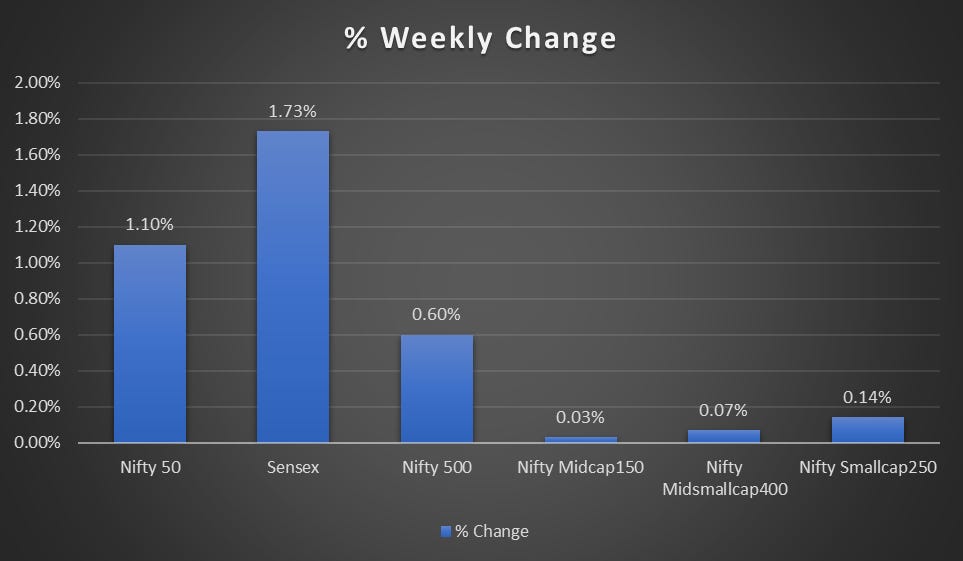
Markets rebounded strongly during the week as concerns around domestic liquidity eased following the RBI's recent accommodative policy actions and hopes of de-escalation in the Middle East fueled a sharp recovery on Friday. Institutional participation appeared concentrated in benchmark names, helping the Nifty50 and Sensex outperform even as Midcap and Smallcap indices remain subdued.
Looking ahead, traders will closely track the developments in global markets, crude oil prices, and FII Inflow headlines. From a technical perspective, the key trigger will be on whether market breadth continues to improve, as broader participation across sectors and stocks could signal an expansion in risk appetite beyond the current large-cap leadership.
Technical Perspective
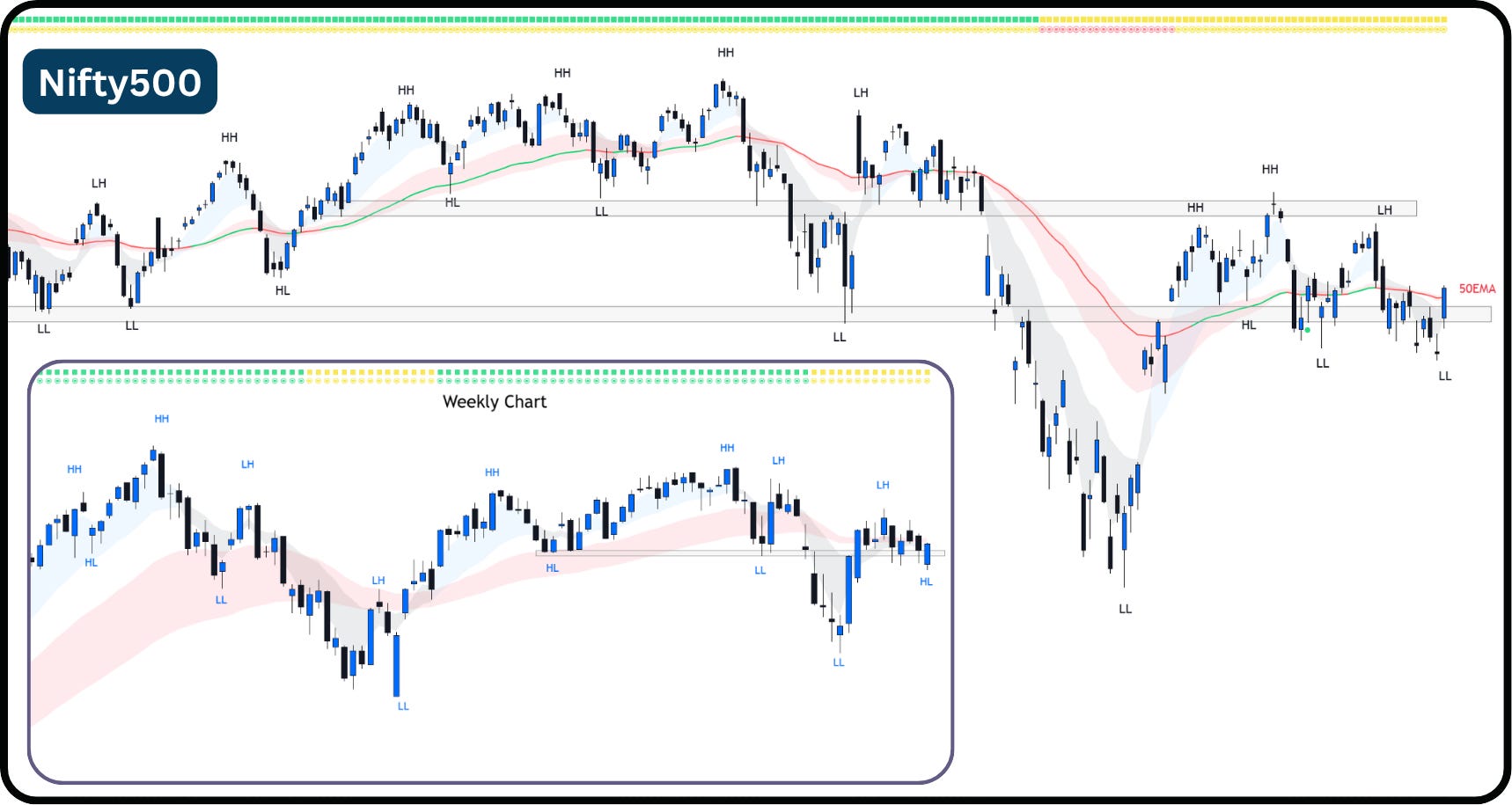
Nifty500 staged a sharp rebound towards the end of the week, reclaiming its 50EMA. However, the EMA continues to trend lower, indicating that short-term sellers still have control of the broader trend.
This week’s strong bullish candle successfully defended the recent support zone near 22,000, preventing a breakdown and keeping the ongoing trading range intact.
The weekly chart remains in a corrective phase. The inability to print a new higher high suggest that the market has not yet transitioned back into a confirmed intermediate uptrend.
Market Breadth
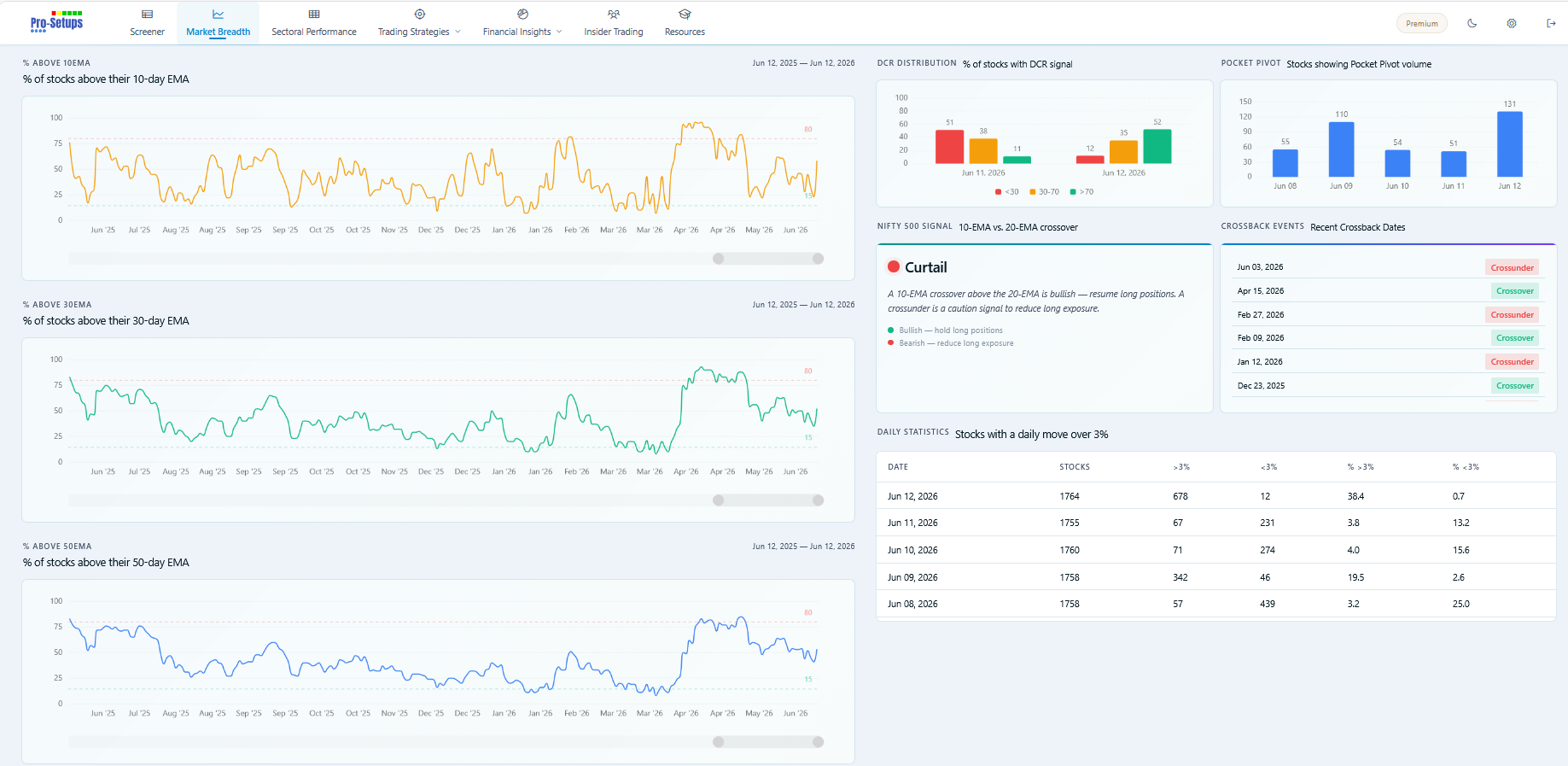
From a structural perspective, the Nifty500 has managed to reclaim its foundation. Last week, the index showed resilience with 54% of stocks above the 50-day EMA. After a sharp mid-week deterioration that saw this metric slip to a low of 41%, the recovery to 53% clocked by the end of the week is vital. As more than half of the constituent stocks are now trading above their 50EMA, the market currently possesses the necessary structural strength to support a move higher.
With the short-term participation at 58% and medium-term participation at 52%, the market is neither in a potential overbought nor an oversold zone. This lack of exhaustion suggests that the current move has room to breathe, provided the broad-based participation continues.
While the Nifty 500 closed the week at 22,600 and the improving breadth is undeniable, the technical picture remains nuanced. The “Curtail“ signal (10EMA below the 20EMA) persists, suggesting that the index itself is still working through a period of consolidation. A strong follow-through in the coming days is required to officially flip the trend signal and confirm that this recovery has longevity.
Accessing Market Breadth on Pro-Setups Dashboard is available for all readers. Click on the link below.
Sectoral Outlook
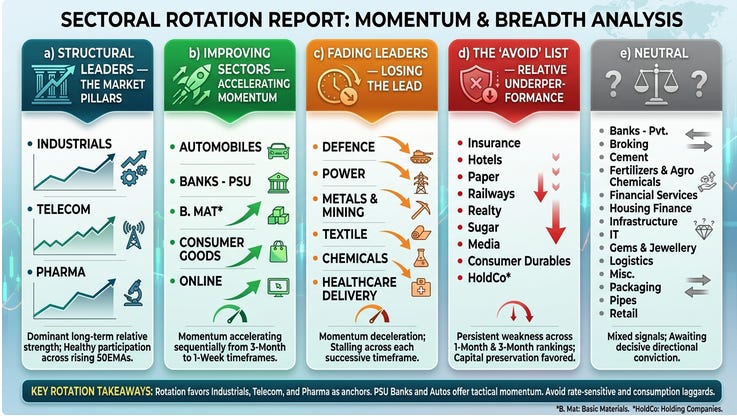
Industrials, Telecom, and Pharma continue to be the market’s leadership pockets, maintaining strong relative strength across multiple timeframes with healthy participation. Within Industrials, Rubber and Cables remain the standout segments, while in Telecom, Equipment stocks continue to outperform the Services segment. One useful feature in the Pro-Setups Dashboard is the ability to drill down from Sectoral Heatmaps into individual industries, helping you identify where the real strength lies within a sector rather than viewing it as a single broad group.
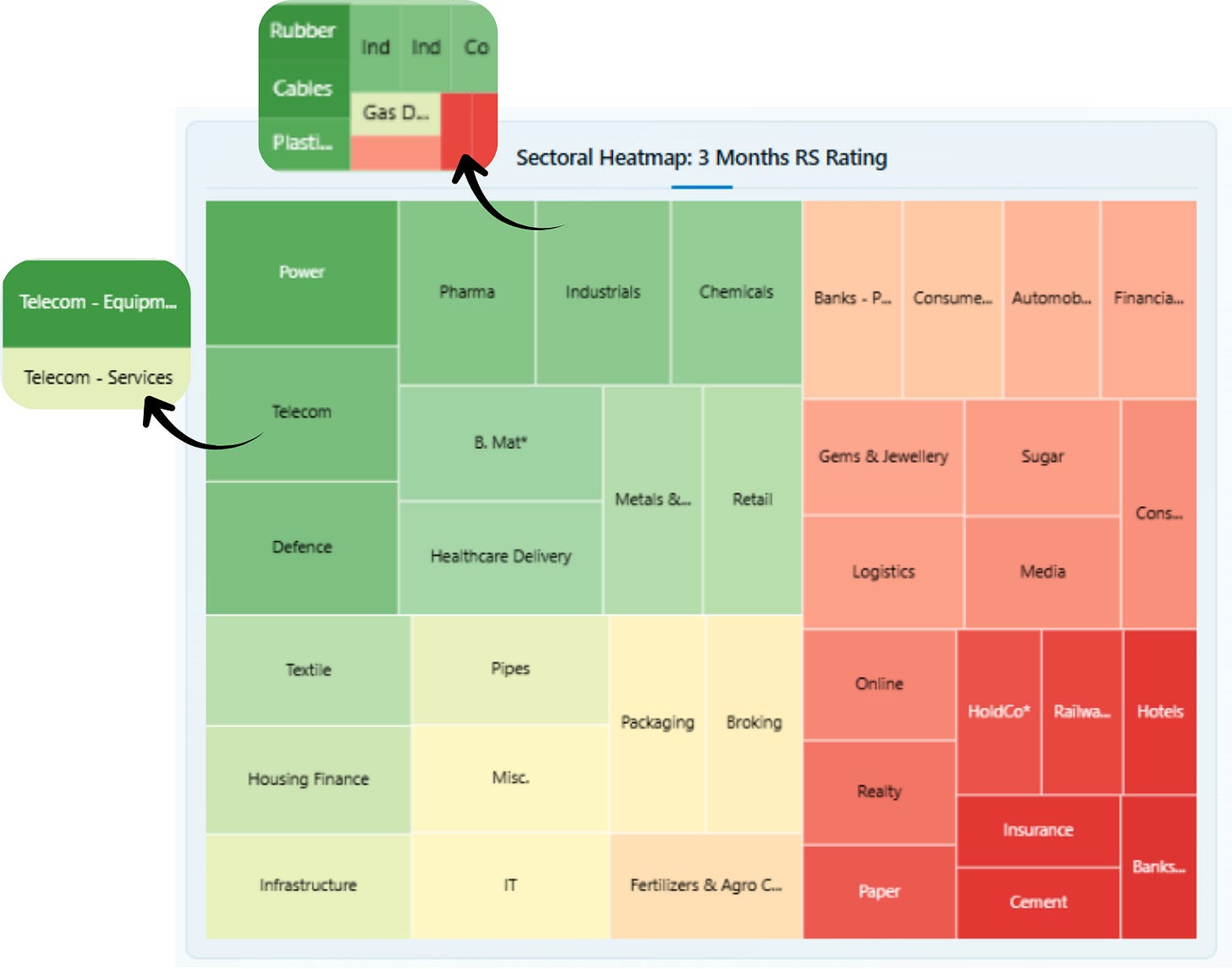
As long as these sectors remain above rising intermediate-term moving averages, they are likely to remain the primary hunting ground for positional and swing traders.
Autos, PSU Banks, Basic Materials, Consumer Goods, and Online businesses are showing improving momentum, with relative strength rankings steadily advancing from longer-term to shorter-term timeframes. These sectors appear well-positioned to provide the next wave of leadership if the broader market expands participation.
Defence, Power, Metals, Chemicals, and Healthcare Delivery are losing momentum after a period of leadership. While not outright weak, relative strength is deteriorating across successive timeframes, suggesting traders may need to become more selective and avoid chasing extended names within these groups.
Insurance, Railways, Realty, Sugar, Media, and Consumer Durables remain among the weakest pockets of the market, exhibiting persistent underperformance across both intermediate and short-term timeframes. Until relative strength improves meaningfully, capital preservation and selective exposure remain the preferred approach in these sectors.
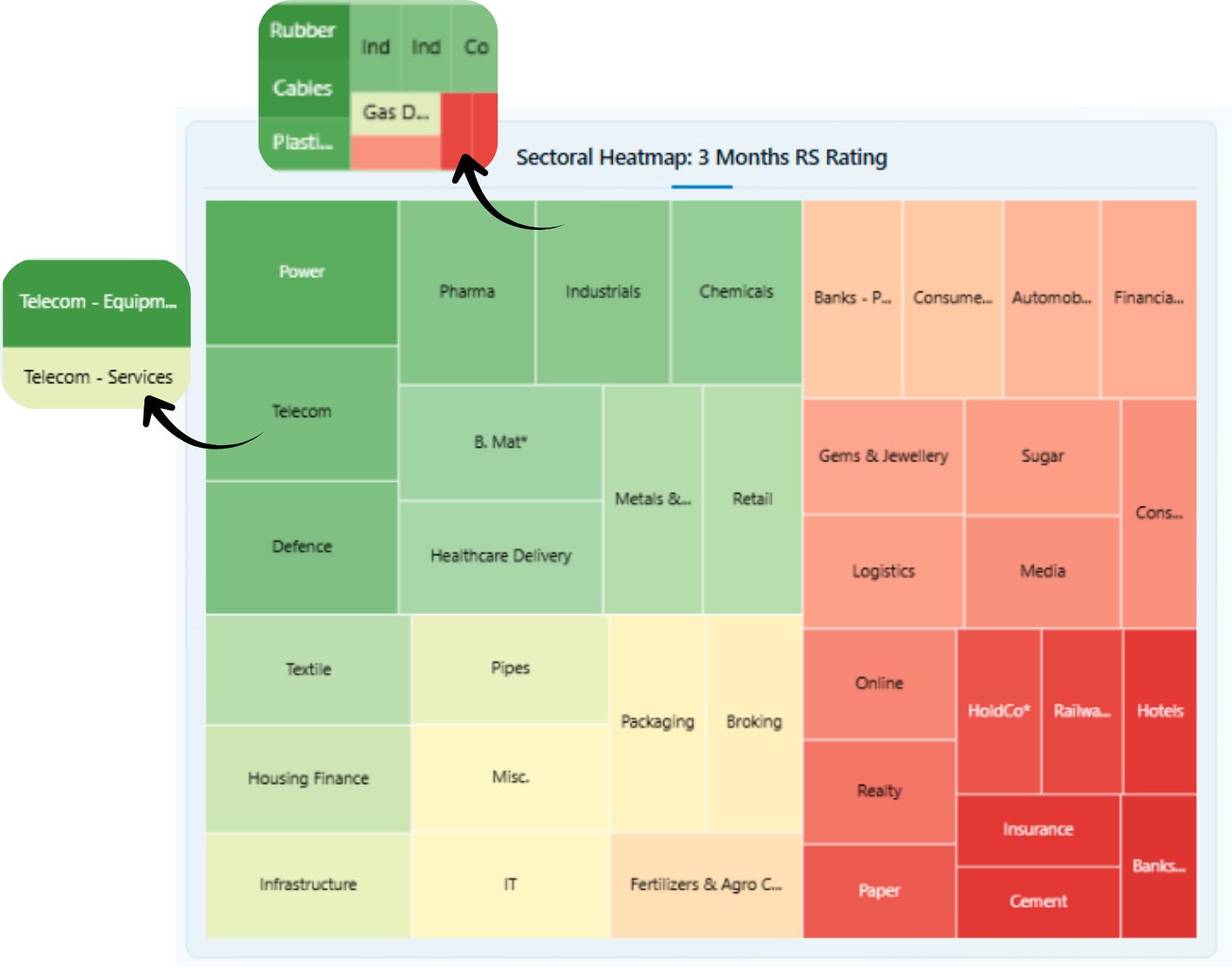
The above infographic is part of our Sectoral Performance page and is updated daily after market hours.
Trading & Investment Strategy
Swing Traders: The sharp rebound from support has improved the short-term backdrop, but with market breadth still lagging, focus on leading sectors such as Industrials, Telecom, Pharma, Autos, and PSU Banks, prioritizing stocks breaking out of well-defined bases. Stay selective and avoid chasing names from sectors showing deteriorating relative strength.
Positional Traders: The weekly structure continues to reflect consolidation rather than a broad-based uptrend, so maintain a measured long bias and gradually increase exposure only if leadership expands beyond large caps and the Nifty500 reclaims recent swing highs. Continue to favor sectors with sustained relative strength while avoiding persistent laggards where capital rotation remains absent.
Summary
The market enters the new week on a firmer footing after a strong rebound in benchmark indices, but participation remains concentrated in select pockets rather than broad-based. The key question now is whether market breadth can expand and validate the recent strength in large caps. Until then, traders are likely to be rewarded more for stock selection than for taking aggressive index-level directional bets.